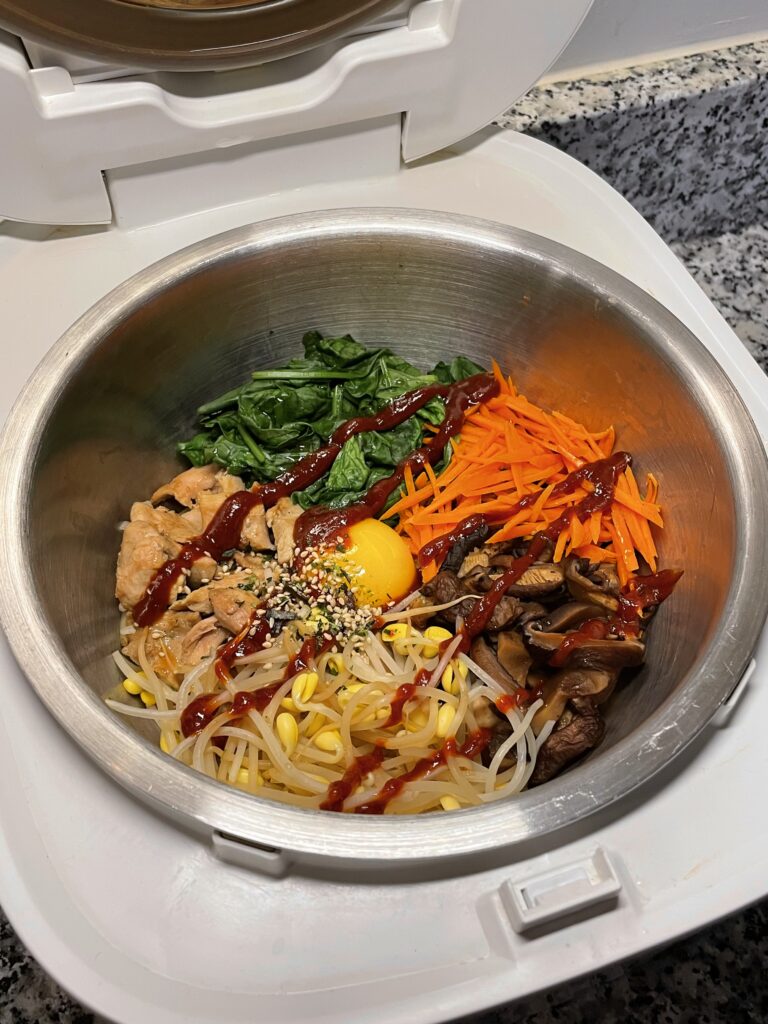
The traditional method of making bibimbap involves sautéing each ingredient separately. That's a lot of work...
This method makes the whole process SO much easier. You just throw everything into a rice cooker! You'll still get all the flavors of bibimbap, but with a lot less effort.
Also, feel free to add whatever veggies you like! Below is a guide on when to add them for the best texture and flavor.
When to add your veggies
At the beginning - Tougher veggies that will hold up through the full rice cooker cycle:
- Dried shiitake mushrooms (rehydrated & sliced)
- Sliced onion
- Corn (frozen or canned)
- Sliced lotus root
- Diced sweet potato
- Diced kabocha squash
10 minutes before the rice cooker finishes - Veggies that need some cooking time, but not the full cycle:
- Frozen edamame
- Sliced napa cabbage
- Sliced bok choy
- Sliced zucchini
5 minutes before the rice cooker finishes (quick steam) - Fast-cooking veggies that will turn mushy if steamed too long:
- Baby spinach
- Bean sprouts
- Shredded carrot
- Sliced bell pepper
After the rice cooker finishes (no heat needed) - These are best added at the end:
- Sliced cucumber
- Shredded purple cabbage
- Pickled radish
- Kimchi
- Seaweed (nori or gim)
- Chopped scallions